How Women in Their Late 30s Are Smoothing Fine Lines and Firming Skin Without Injectables
Women in their late 30s keep layering pricier creams onto skin that's lost elasticity — but topicals can't reach the layer where collagen is actually made, and one at-home light mode can.

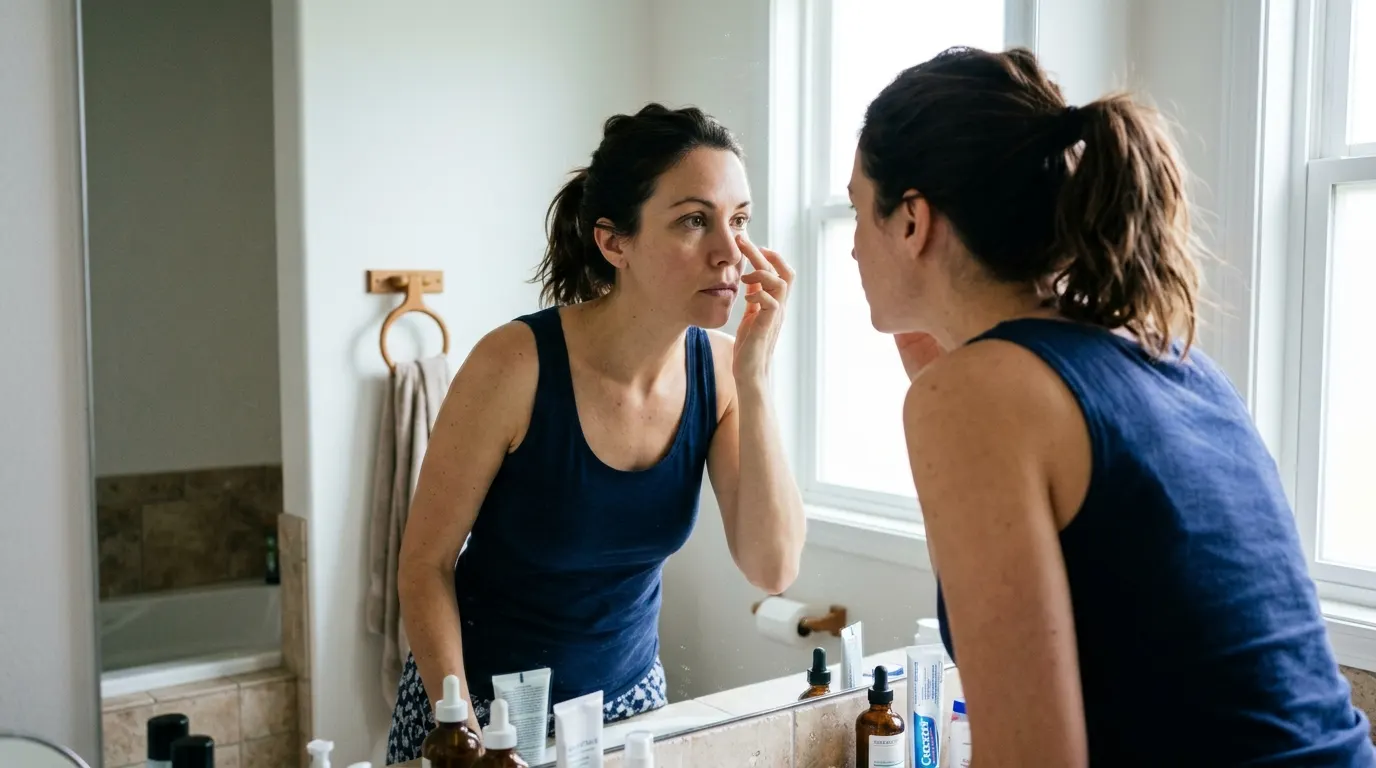
You catch it in the bathroom mirror, mid-morning, in that unforgiving overhead light.
The fine lines around your eyes don't smooth out anymore when your face relaxes. Your cheeks feel a little softer than they used to — not plumper, just looser, like the skin has stopped holding its shape.
And on the shelf beside you sits a small fortune in serums that swore they'd fix exactly this.
Why do the pricier creams keep letting you down?
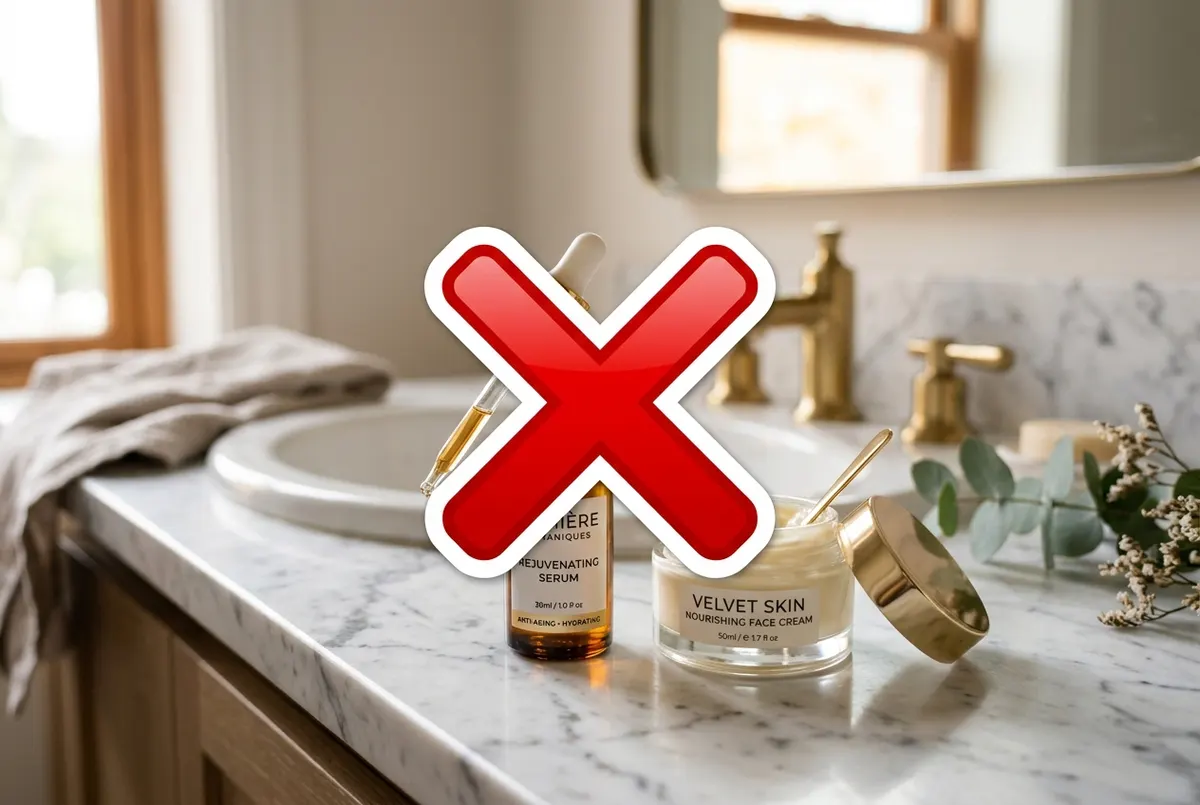
The more you spend, the less it seems to matter.
You graduated from the drugstore aisle to the department-store counter to the $120 jar with the dropper. And the lines are still there.
It's not that you're doing it wrong. You're doing everything right — the vitamin C in the morning, the retinol at night, the patient months of waiting. The elasticity keeps slipping anyway.
Maybe this is just what your late 30s look like.
Or whether the only real answer is a needle and a waiting-room appointment you never wanted.
So, where do fine lines actually start?
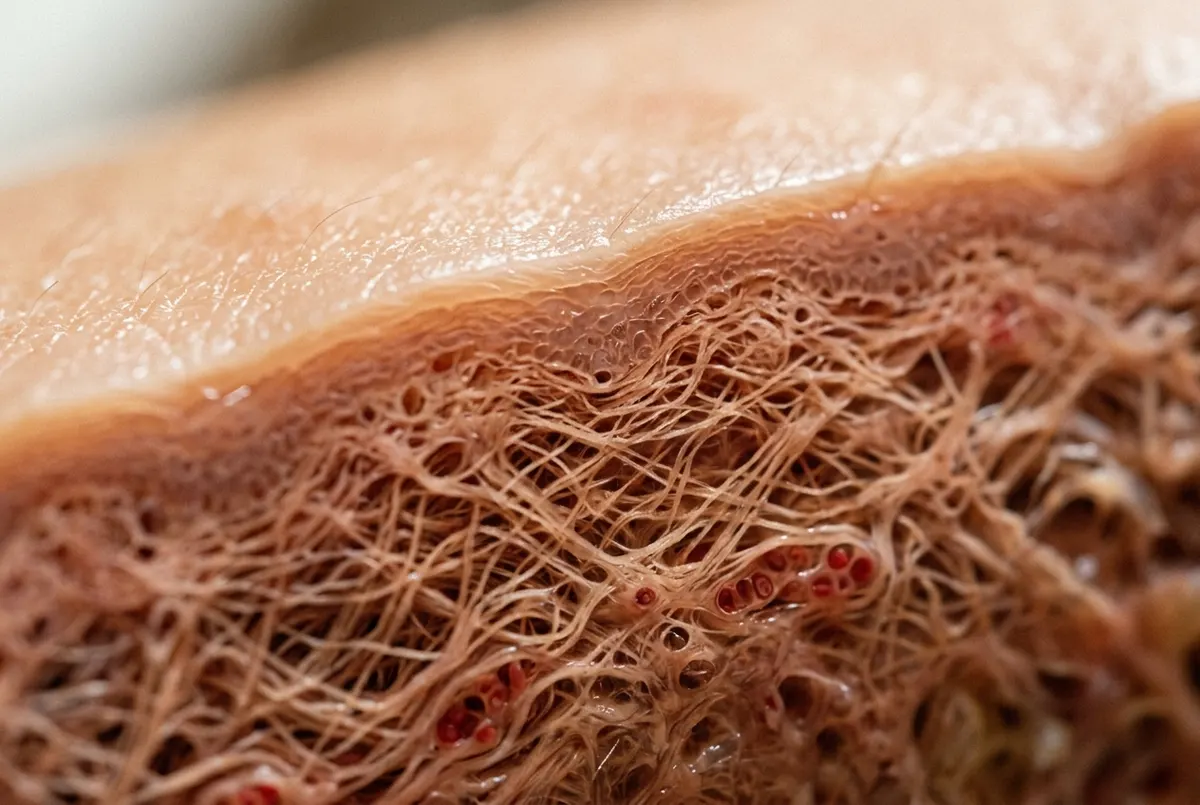
Fine lines begin deeper down.
They start in the layer where your skin makes collagen — the springy scaffolding that keeps skin firm and bouncy. Around 25 years old, that factory slows down. Less collagen means less bounce, and the creases start to set.
A cream sits on top of your skin. The collagen it's supposed to save is made several layers below — well past where any lotion can reach.
Call it the surface gap: the space between where your creams land and where your wrinkles are actually born. You can keep layering products onto the roof. The problem is in the foundation.
This is why the pricier serum rarely delivers. It's not weak. It's just in the wrong place.
What finally reaches the layer that matters?
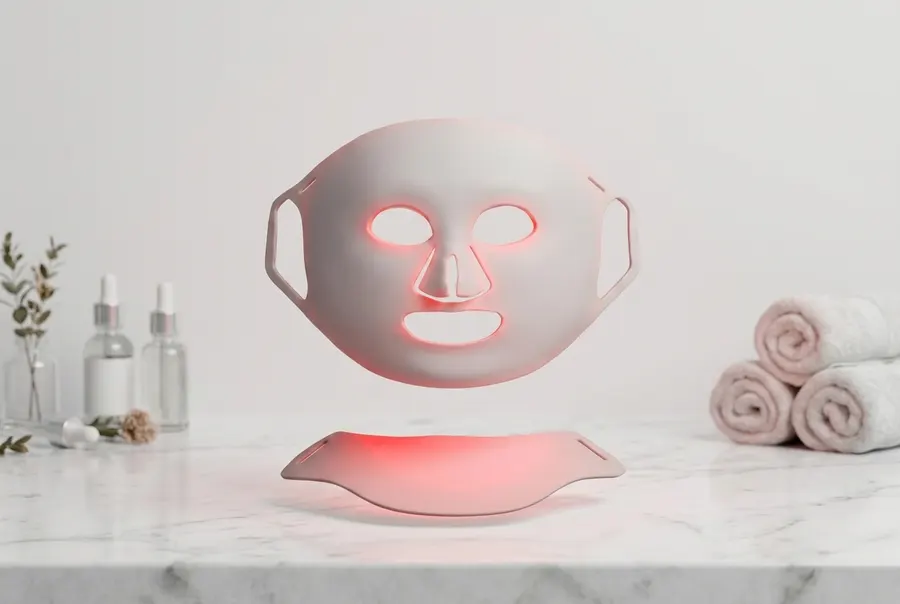
Light does.
Specifically, a red wavelength measured at 620nm — a color of light your skin cells can absorb and use as a gentle nudge to start rebuilding collagen again. That's the whole point of red light therapy: it works past the surface gap, in the foundation where creams never reach.
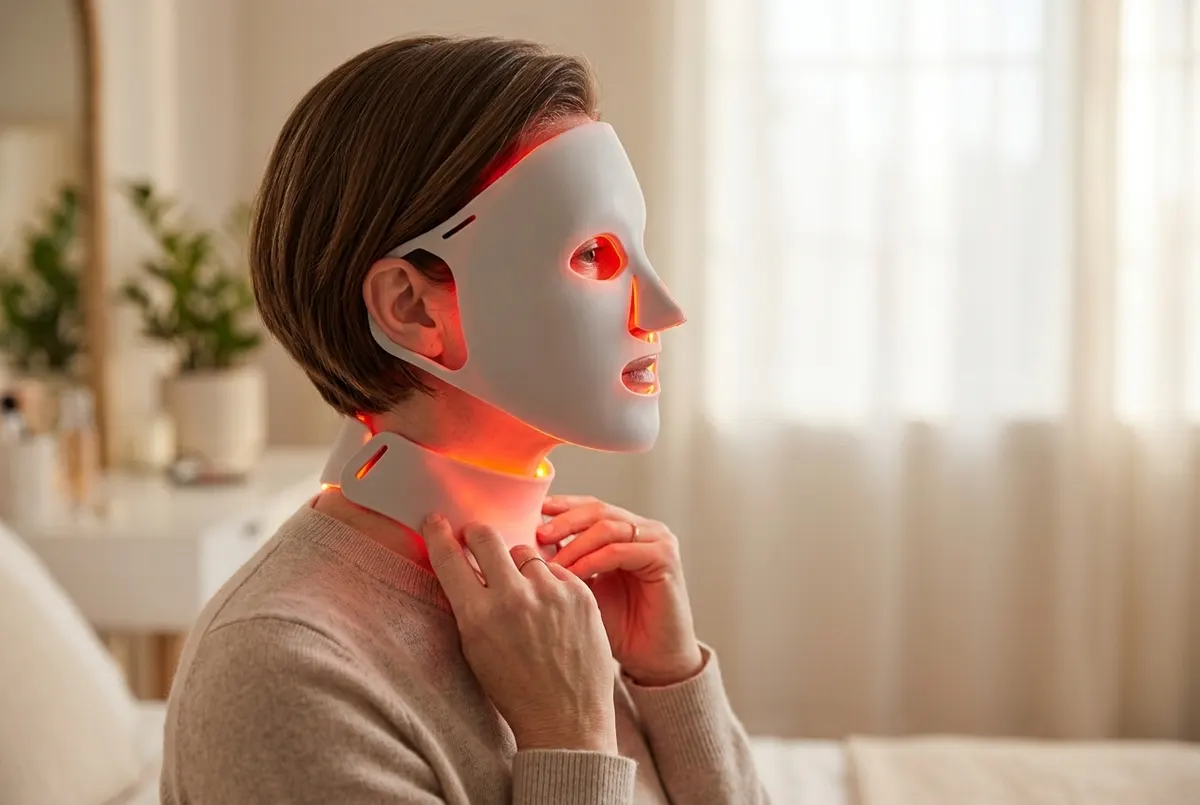
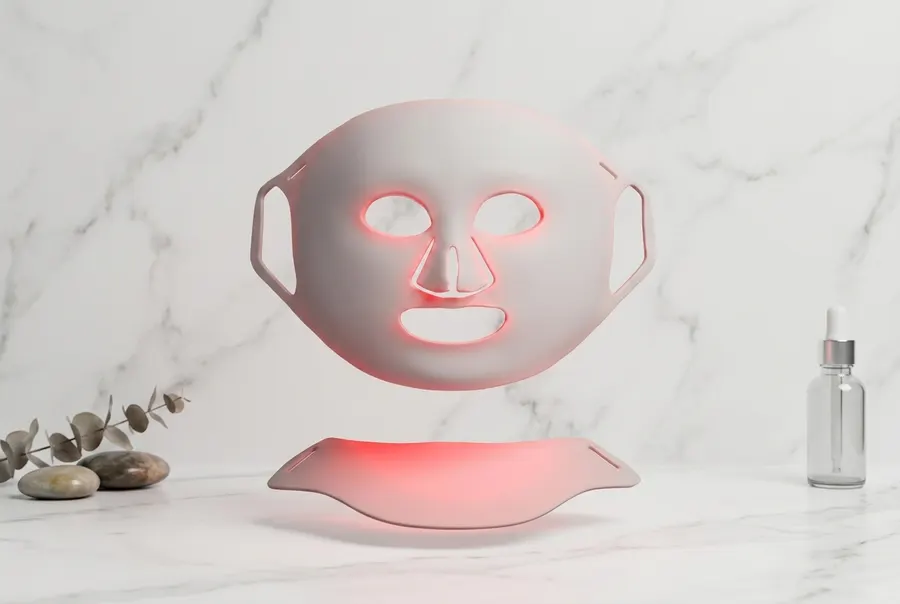
The Red Light Therapy Face & Neck Mask puts that wavelength into a mask you wear at home. It pairs red light with a second, blue 460nm mode that helps calm the bacteria behind breakouts. Two jobs in one device.
If red light therapy has felt like a passing trend, that skepticism is fair. But this isn't a vibe.
Research published in Skin Research and Technology in 2023 linked red light to visibly reduced fine lines and firmer skin. Three licensed estheticians signed off on this one.
It covers the neck — the spot most devices ignore and most women forget. It runs on rechargeable batteries, so you can wear it on the couch instead of tethered to a wall.
What does it actually do for your skin?
The headline promise is collagen and smoother lines, but the light works on a few fronts at once. Here's the full picture of what regular use is built to support.
Why women in their late 30s are switching
 1
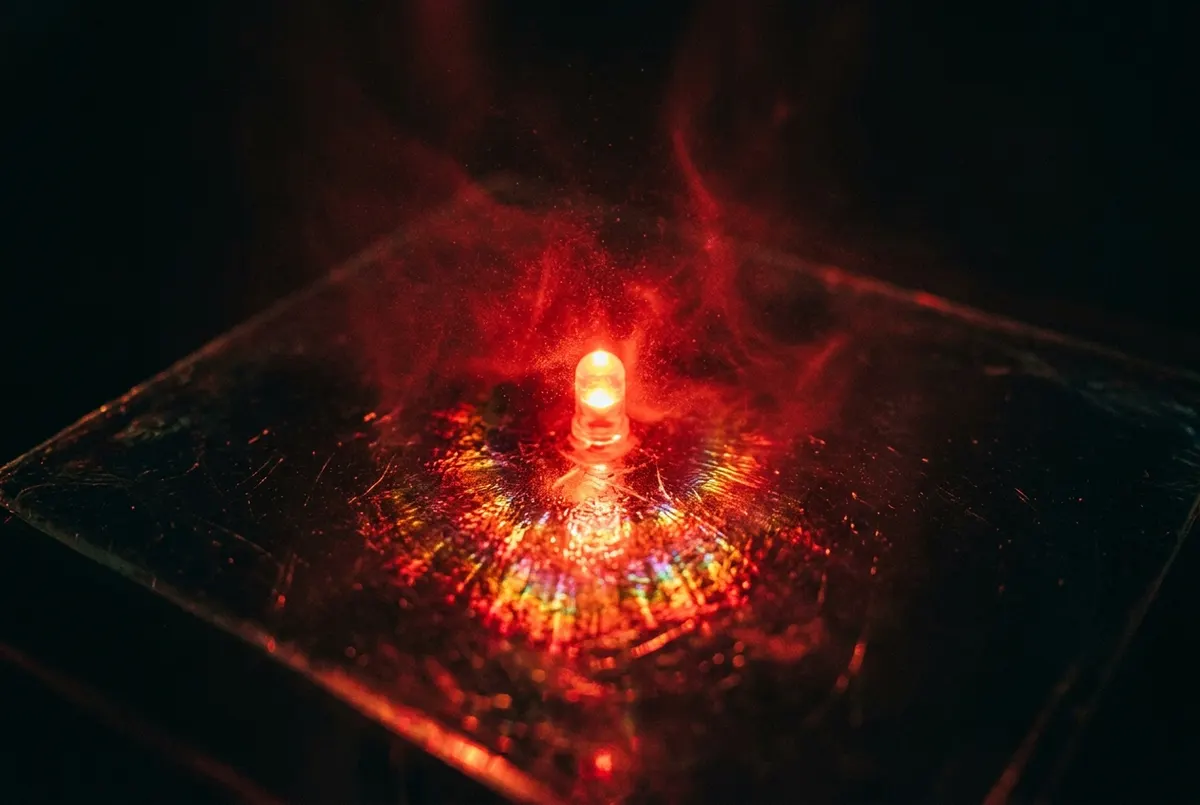
Dual wavelength (620nm + 460nm) mimics professional salon strength
Professional LED therapy cabinets operate at specific wavelengths proven to penetrate skin and trigger biological response. This mask delivers 620nm red light for collagen stimulation and 460nm blue light in mixed mode—the same spectrum dermatology clinics use. The dual-wavelength pairing amplifies results beyond single-wavelength at-home alternatives, bringing clinical-grade intensity into a portable format.
 2
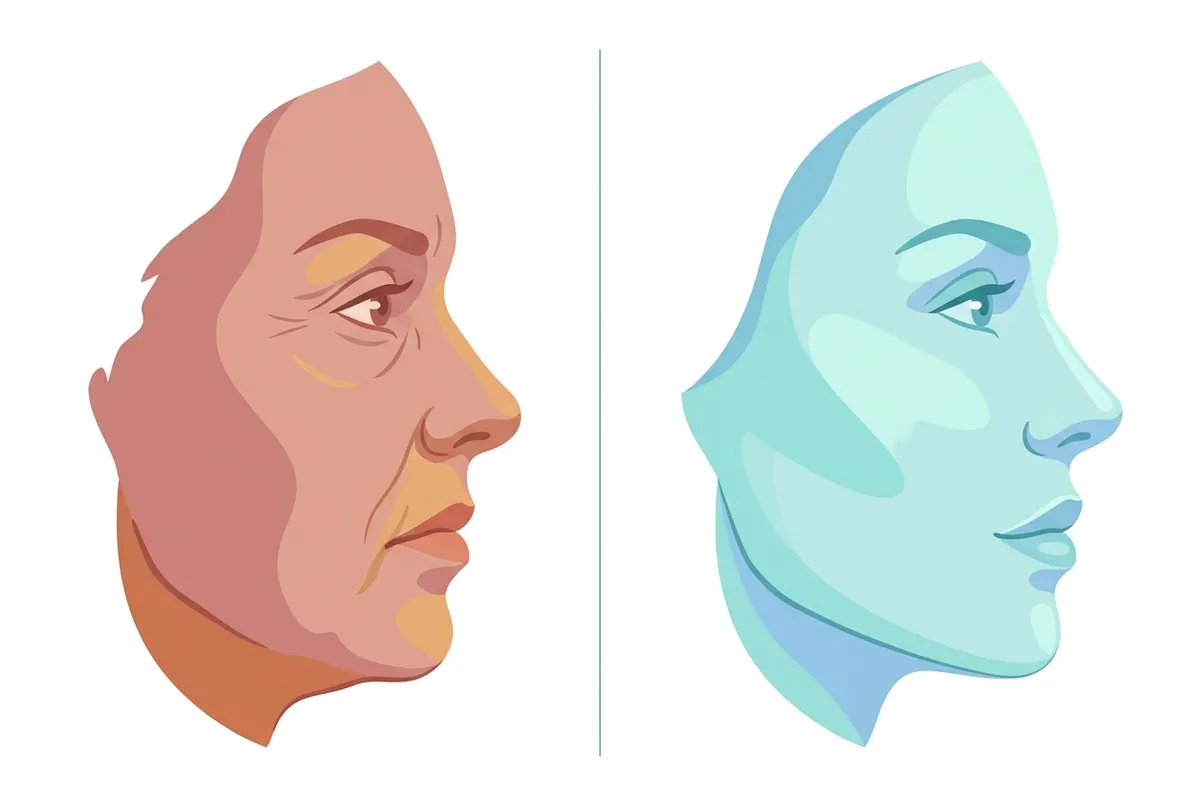
Collagen production visibly increases within weeks, not months
Red light penetrates to the dermal layer where fibroblasts live—the cells responsible for making collagen. Clinical research (Couturaud et al., Skin Res Technol 2023) documents measurable increases in collagen density after consistent red light exposure. Users targeting fine lines and elasticity loss typically notice plumper, smoother skin texture between weeks 3–6 of regular use, when collagen synthesis accelerates enough to register visually.
 3
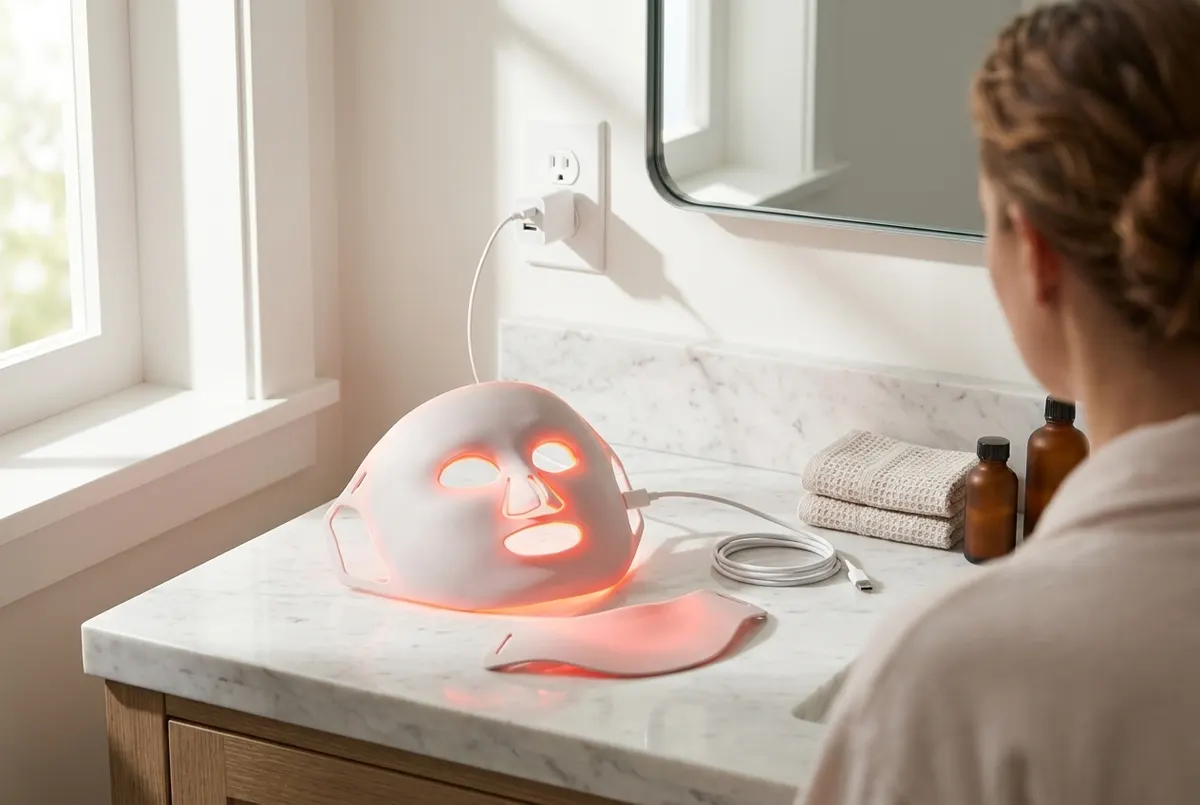
At-home portability solves the professional-access bottleneck
Dermatology clinics operate on appointment schedules; consistent red light therapy demands weekly or twice-weekly sessions for results. This mask is rechargeable and cordless, eliminating the at-home setup disadvantage that typically separates salon-quality tools from consumer devices. A user can fit 15–20 minute sessions into an existing morning or evening routine without committing to travel or scheduling, making professional-strength consistency actually achievable at home.
 4
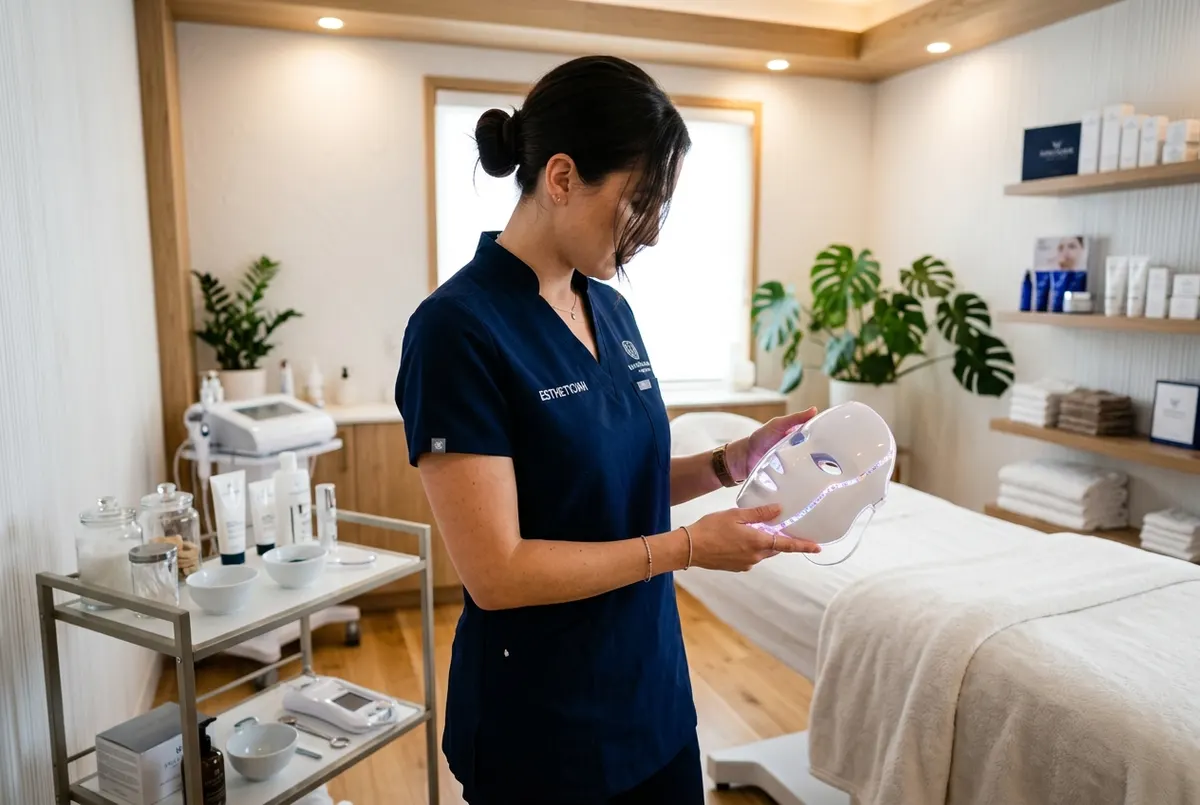
Licensed estheticians endorse the results and safety profile
At-home LED masks flooded the market after the professional trend took off, and most lack independent validation. This device carries approval from three licensed estheticians who have tested it alongside their salon-grade equivalents. Their endorsement covers both efficacy—collagen stimulation and fine-line reduction match professional expectations—and safety for unsupervised home use, removing the guesswork for a skeptical buyer considering her first red light device.
 5
Face and neck coverage in one device saves money and time
Neck skin loses elasticity faster than the face—fine lines and crepey texture often show age first—yet most at-home LED masks treat only the face. This mask covers both zones in a single session, addressing the full visible-aging complaint without purchasing separate tools or doubling treatment time. At $350 complete with batteries and charger, the all-in-one design undercuts competitors charging $395+ for face-only alternatives, making comprehensive anti-aging more accessible and practical.
How long until you notice a difference?
Collagen rebuilds on its own schedule, not overnight — so it helps to know what's realistic. Here's the honest week-by-week of what firming skin from underneath actually looks like.
How does it stack up?
The real question every skeptic asks: can an at-home mask hold up against a professional LED session? Here's the side-by-side, including the coverage and cost most comparisons skip over.
- Single wavelength—miss acne-causing bacteria
- Face-only coverage—neck ages separately
- Tethered to wall outlet
- Unverified by licensed estheticians
- $395+ without included accessories
- Batteries and chargers sold separately
- Dual wavelength 620nm + 460nm
- Full face AND neck in one mask
- Rechargeable portable—use anywhere
- Esthetician-approved by three professionals
- $350 complete with all accessories
- 2 batteries, cables, dual charger included
Get Started Today
Still have questions?
Common questions about whether the mask matches professional results, realistic timelines, and value against competitor options.
Firmer skin starts underneath